Jaluni (or Jaluna): Grecanic Easter sweets rich in history and tradition
What are Jaluni
Jaluni, also known as Jaluna, are traditional sweets from Calabria, particularly from the Grecanic area of the Ionian Aspromonte. They are deeply connected to the Easter period, when families would gather to prepare symbolic foods linked to rebirth and togetherness.
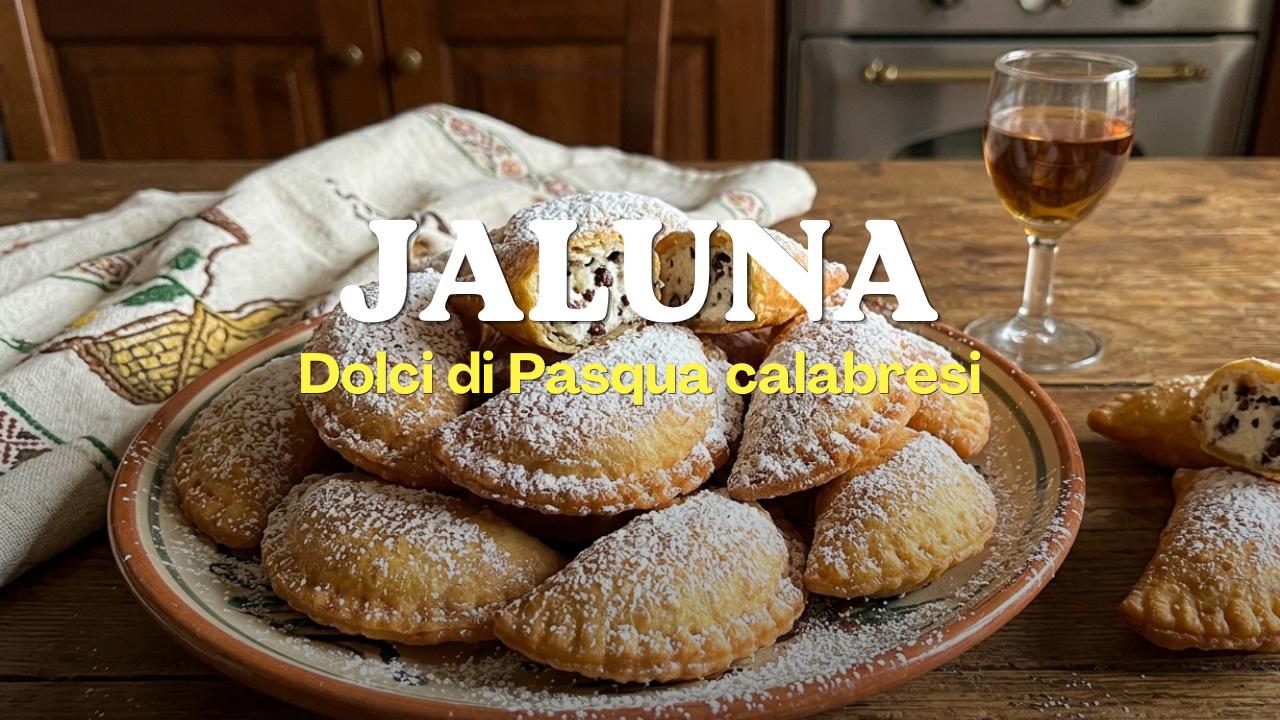
From a culinary perspective, Jaluni resemble fried sweet ravioli, made with a simple dough that encloses a creamy ricotta filling. The result is a rustic, genuine dessert full of character.
The origins of Jaluni: between Grecanic culture and ancient traditions
These sweets have their roots in the Grecanic culture, one of the most fascinating in Southern Italy, where traces of Greek language and traditions are still preserved today.
Jaluni are a perfect example of cultural blending: they reflect both the simplicity of rural cooking and deeper symbolic traditions. Their connection to Easter is no coincidence, as this time of year has always been associated with rebirth, abundance, and new life.
In some interpretations, even their shape carries symbolic meaning, linked to light and spirituality—signs of a tradition that has evolved over time while maintaining its identity.
Ingredients and characteristics
The beauty of Jaluni lies in their simplicity. The outer dough is basic and designed to highlight the filling, while the heart of the dessert is ricotta, traditionally sheep’s milk ricotta, combined with powdered sugar, candied orange, and a hint of cinnamon.
Once fried, they become golden and slightly crisp on the outside, while remaining soft and creamy inside—a contrast that makes them truly special.
A sweet that tells the story of Easter
In Calabrian tradition, making Jaluni was never just about cooking. It was a shared ritual. Families would come together in the days leading up to Easter, turning the kitchen into a place of connection and memory.
This is what makes Jaluni so meaningful: they are not just a dessert, but a symbol of community. Every family has its own version, passed down through generations, with small differences that make each one unique.
Variations and local differences
As with many traditional recipes, Jaluni vary from place to place. Shapes, fillings, and aromas can change slightly depending on local habits and family traditions.
Some versions are simpler, others richer, but they all share the same essence: a humble dough filled with something precious.
How to make Jaluni
If you’d like to try them at home, here is the recipe.
Ingredients
- 300 g all-purpose flour
- 50 g granulated sugar
- 2 eggs
- 300 g high-quality ricotta
- 120 g powdered sugar
- Candied orange (to taste)
- Cinnamon (to taste)
- Vegetable oil for frying
- Powdered sugar for dusting
Method
Start with the dough. Place the flour on a work surface, add the granulated sugar, then incorporate two eggs. Knead until you obtain a smooth, compact, and elastic dough. If needed, keep working it a little longer until it becomes homogeneous and no longer sticky. Cover and let it rest for about 30 minutes.
Meanwhile, prepare the filling. In a bowl, mix the ricotta with the powdered sugar until smooth and creamy. Add finely chopped candied orange and a pinch of cinnamon.

Roll out the dough into a thin sheet. Cut out discs or rectangles and place a small amount of filling in the center.
Fold the dough to form half-moons or ravioli, sealing the edges carefully with your fingers or a fork. This step is important to prevent them from opening while frying.
Heat plenty of vegetable oil and fry the Jaluni in batches until golden and slightly puffed. Drain on paper towels to remove excess oil.
Let them cool slightly, then dust with powdered sugar before serving.
Why rediscover Jaluni today
In a fast-paced world, recipes like Jaluni remind us of slower rhythms, traditions, and the importance of sharing. They show how something simple can carry deep meaning and preserve cultural identity.
Conclusion
Every family has its own version of Jaluni. Some add more cinnamon, others prefer a firmer ricotta, some make their own candied fruit. Small details change, but the essence remains the same.
These are sweets that speak of home, of hands working together, of shared tables during festive days. And perhaps that is their most important ingredient: memory.
Making them today means keeping that connection alive. It means continuing to tell a story that, through simple recipes like this one, still has the power to bring generations together 💛
If you’d like, I will be happy to have you among my followers on Instagram